Electric Bike Pump vs CO2 Inflator Cost UK
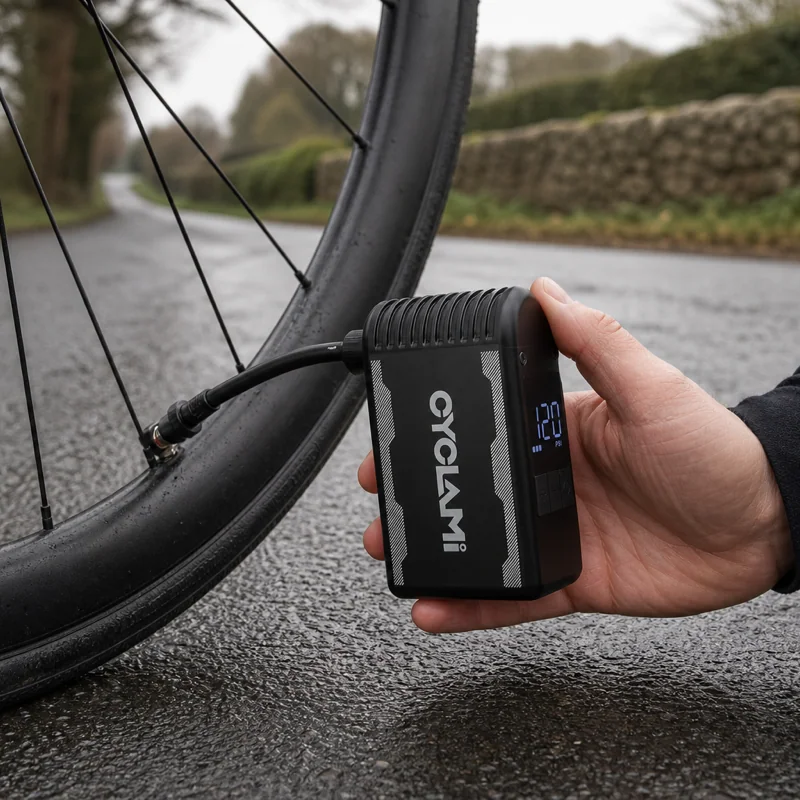
TL;DR: When comparing an electric bike pump vs CO2 inflator, electric pumps offer better long-term value, precise pressure control, and zero single-use waste. While CO2 inflators provide a rapid, one-time blast of air, they are susceptible to freezing in cold UK weather, require continuous cartridge purchases, and often lead to unpredictable pressure. Based on our testing at CYCLAMI UK, regular commuters and road cyclists save money within a single season by switching to a rechargeable electric pump.
Key Takeaways
- CO₂ looks cheap until you total it up: UK cartridge prices, repeat punctures, and “wasted” inflations can make CO₂ the more expensive option over a season.
- Single-use canisters create avoidable waste: Consequently, an electric pump supports more sustainable cycling accessories choices, especially for regular commuters.
- Cold and wet UK conditions expose CO₂ weaknesses: Pressure drop and tricky handling with gloves can make emergency bike tyre inflation less reliable on winter rides.
- Electric pumps can pay for themselves: For many UK riders, a portable Cyclami pump reaches ROI after a modest number of punctures and top-ups.
- Real-world usability matters: Ultimately, ease of use on a rainy A-road is where electric pumps often beat CO₂ for confidence and consistency.
Is an electric bike pump better than a CO2 inflator for UK riders?
If you are wondering whether to choose an electric bike pump vs CO2 inflator, the direct answer is that electric pumps offer a more cost-effective, reliable, and sustainable solution for most UK cyclists. It always happens at the worst time: you’re on the way to work, it’s spitting rain, and the rear tyre starts to squirm. You’ve got a choice—carry a CO₂ inflator for a fast blast of gas, or switch to a compact electric pump that can top up precisely, anywhere. On paper, CO₂ is “cheap” and “instant”. However, in practice, UK riders often discover the true cost shows up later: repeated cartridge purchases, wasted inflations, and the frustration of getting the pressure wrong when you’re cold, wet, and late.
Furthermore, this guide breaks down the real-world comparison with UK pricing, winter reliability, and environmental impact in mind. If you’re weighing up whether an electric pump is worth it for commuting, weekend riding, bikepacking, or club runs, you’ll leave with clear numbers and a practical decision framework.
How much do CO2 cartridges cost in the UK? (The hidden costs)
CO₂ inflators are popular primarily because they’re fast and small. The hidden issue, however, is that they’re highly consumable. Every “save” costs a cartridge—sometimes two—plus the initial inflator head. Over time, that adds up significantly more than most riders expect, especially when you factor in misfires and partial inflations.
What’s the cost of CO₂ cartridges UK riders typically pay?
Prices vary by brand and whether you buy multi-packs, but it’s common to see UK retail pricing that works out around £1–£3 per cartridge (often 16g or 25g). Road riders frequently carry multiple 16g canisters; gravel and MTB riders often favour 25g for volume. Moreover, if you’re using two cartridges to seat a tubeless bead or to get back to rideable pressure, you can easily spend £2–£6 on a single stop—before you’ve even replaced the punctured tube or plugged the tyre.
Why do CO₂ spending costs creep up?
- Over-inflation or under-inflation: It’s easy to overshoot with CO₂ and waste a cartridge, especially on narrow road tyres.
- Tyre volume differences: One 16g may be enough for a 23–28mm road tyre to “get you home”, but it won’t always reach your preferred PSI.
- Multiple punctures happen: Commuting on debris-strewn British lanes, winter grit, and broken glass can mean more than one incident in a single month.
- CO₂ leakage: CO₂ molecules diffuse through inner tubes faster than standard air. As a result, pressure can drop sooner than expected—meaning you may still need a pump later.
If you want a deeper overview of the practical pros and cons of different portable options, our pillar guide is a great companion read: Ultimate Guide to Portable Electric Bike Pumps in the UK (2024).
Looking for the right tool? Check the digital tyre inflator for full UK specs.
Are CO2 inflators bad for the environment?
For many riders, the financial cost is only half the story; the other half is waste. Single-use CO₂ canisters are typically made of steel. While steel is technically recyclable, real-world outcomes depend heavily on local authority rules. According to UK guidelines on pressurised waste, recycling rules vary wildly by council and are influenced by waste stream contamination and safety concerns, meaning kerbside bins often reject them.
Why this matters for sustainable cycling accessories
In contrast, an electric pump is a reusable, long-term tool: you charge it, use it repeatedly, and it doesn’t generate a cartridge-per-puncture waste stream. If you ride year-round—especially as a dedicated commuter—your puncture kit is something you’ll rely on constantly. Therefore, switching to a rechargeable device is a straightforward way to reduce single-use items without sacrificing your roadside preparedness.
Additionally, there’s an increasingly practical angle: UK transport and workplace sustainability policies are actively pushing active travel. Many employers now offer cycle-to-work schemes and secure storage, and some sites actively discourage disposable waste in changing rooms. Ultimately, a reusable pump perfectly aligns with that sustainable direction of travel.
Why do CO2 inflators freeze or fail in cold UK weather?
UK winter riding presents a specific kind of test: freezing fingers, relentless rain, and roadside stops on unlit lanes. While CO₂ can still work, based on our testing, it is far less forgiving than many riders assume.
CO₂ cools rapidly (and so does your valve)
When CO₂ expands from high cartridge pressure into your tyre, it cools sharply. Consequently, that can make the cartridge and inflator head uncomfortably cold—or even dangerous—to handle without thick gloves. In our experience, this is exactly where fumbling happens: cross-threading the valve, poor sealing, or dumping gas too quickly and losing control.
Pressure drop is more noticeable in cold conditions
Tyre pressure drops as the ambient temperature drops. The ideal gas law explains this direction of travel: colder air equates to lower pressure for a fixed volume. That’s true for both air and CO₂, but riders often feel it more acutely with CO₂ because they’ve done a “quick blast” to get going, only to find the tyre feels dangerously soft minutes later.
For an evidence-based reference on the temperature-pressure relationship, the UK’s Met Office explains the underlying principle in accessible terms: Met Office: how pressure works. While it discusses atmospheric pressure, the exact same physics underpins why your tyres feel softer in the bitter cold.
Wet roadside reality: control beats speed
Admittedly, CO₂ is fast when everything goes perfectly. However, winter punctures rarely happen in ideal conditions. With a compact electric pump, you can set an exact target pressure and inflate steadily. This means less stress, zero wasted gas, and typically much better results if you’re trying to avoid pinch flats or protect a tubeless seal.
If cold-weather inflation is a recurring headache for you, this UK-specific walkthrough is highly recommended: How to Inflate Road Bike Tyres in Cold UK Weather Conditions.
Are electric bike pumps worth the investment? (Calculating ROI)
Return on investment (ROI) sounds like financial jargon, but for regular cyclists, it is highly practical. Based on our testing at CYCLAMI UK, if a high-quality portable electric pump costs around £35 to £50, and a CO₂ setup costs roughly £2 to £3 per flat, the electric pump completely pays for itself after just 12 to 15 punctures or top-ups. Furthermore, when you factor in the peace of mind, precise pressure control, and environmental benefits, an electric pump is the clear winner for modern British cyclists.
Related reads: Ultimate Guide to Portable Electric Bike Pumps UK · CYCLAMI A2S Pro vs A2S Pro Max UK Comparison
Ready to try CYCLAMI UK?
Shop Now — £73.81