Best GPS Cycling Computers Under £100 in the UK (2024)
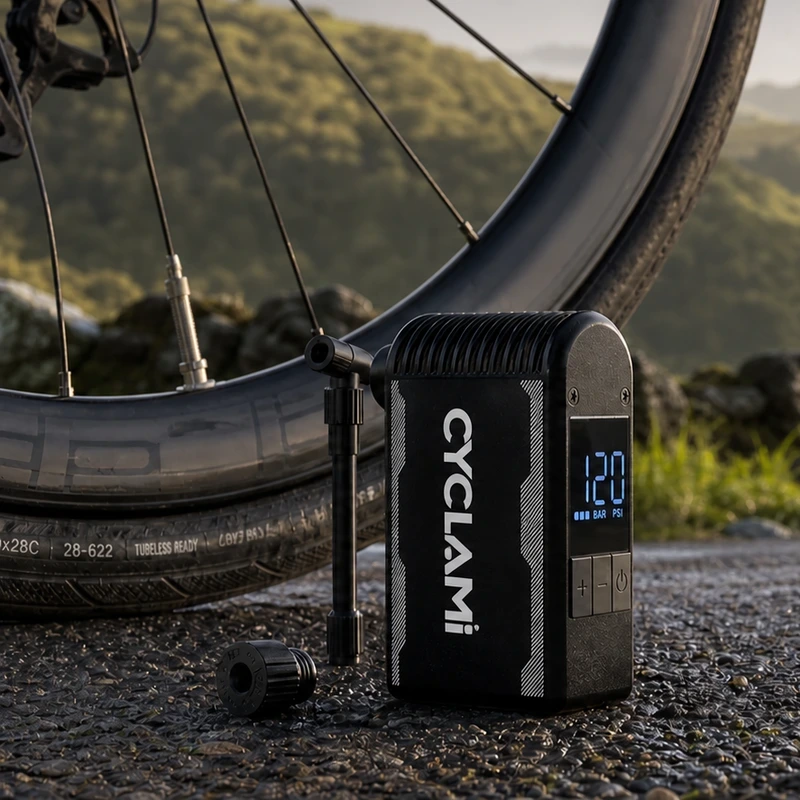
Electric Pump vs CO2 vs Mini Pump — Which Should UK Cyclists Carry?
Honest three-way comparison for UK riders - cost per year, weight, inflations, heat and faff. When CO2 still wins and when an electric pump pays off.
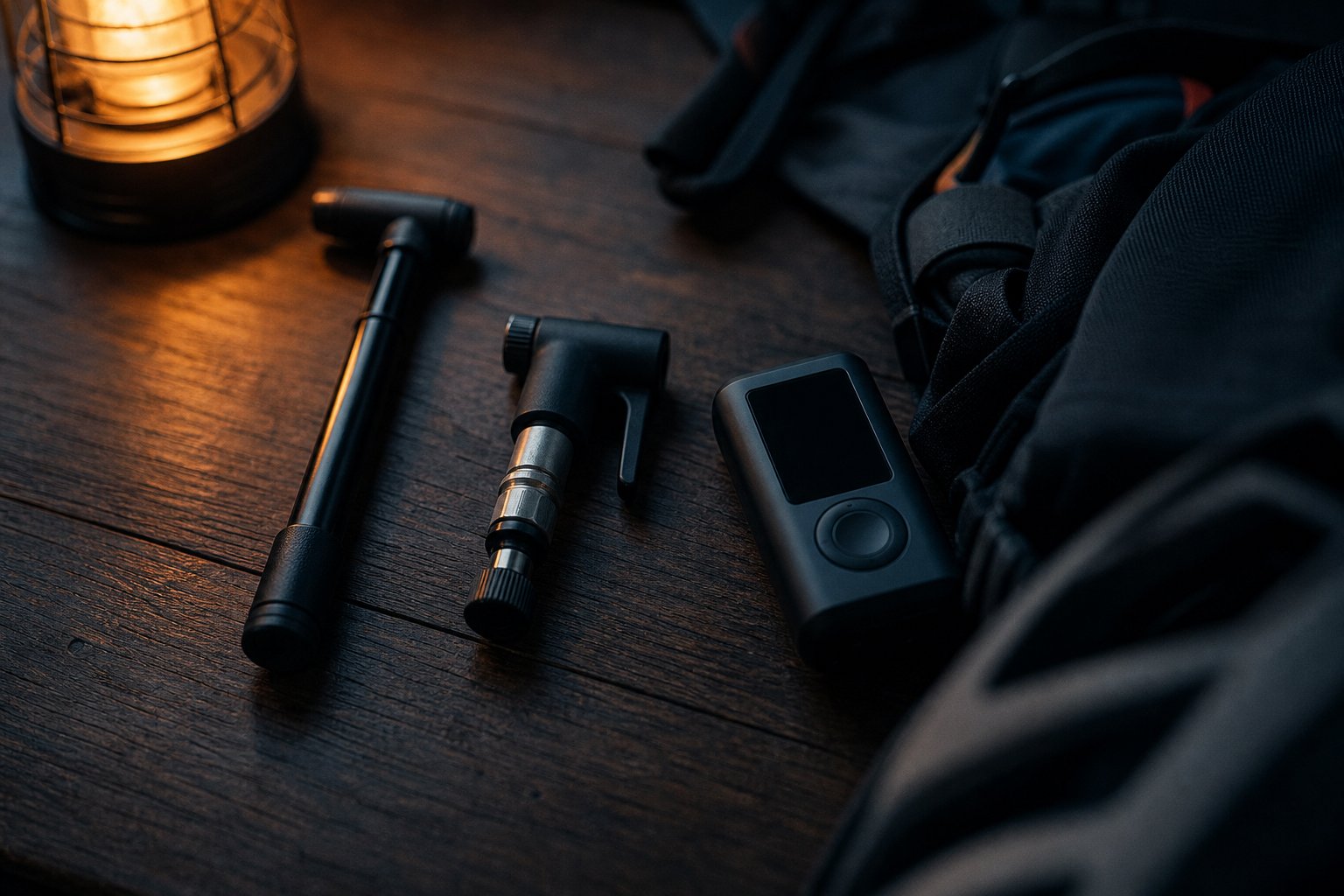
For UK riders the honest answer is: a mini pump is the cheapest insurance, CO2 is the fastest one-shot fix, and an electric pump is the most convenient over a full season — it reaches an exact preset pressure with no effort and no recurring cartridge cost, at the price of some noise and battery care.
The debate is real, so let’s be fair to all three
Spend ten minutes in r/cycling and you will find both camps dug in. One thread titled “E-Pumps… Meh” runs thirty-plus comments of sceptics pointing out that a hand pump never needs charging. The other side answers with the phrase that recurs across almost every owner post: “set the pressure and it stops when the pressure is reached”. Both are right about their own priorities. The way out of the argument is arithmetic and honesty about failure modes, not adjectives.
Head-to-head comparison
| Criterion | Mini hand pump | CO2 inflator | Electric pump |
|---|---|---|---|
| Typical UK price | £15–£40 | £20 + ~£1.50/cartridge | £50–£120 |
| Cost after 20 punctures | purchase price only | +£30 in cartridges | purchase price only |
| Effort per flat | high — hundreds of strokes | near zero | near zero |
| Time to ~80 PSI (700x25c) | 3–10 min of work | ~30 seconds | slower than CO2, far quicker than hand work — and hands-free to the preset |
| Pressure precision | guesswork unless gauged | none — dump and hope | digital preset, ±1 PSI claimed |
| Repeat use on one outing | unlimited (your arms) | one cartridge each | multiple — see charge matrix |
| Failure mode | none worth naming | run out of cartridges | flat battery if neglected |
| Winter behaviour | fine, cold hands | cartridges chill the valve | lithium cells dislike deep cold |
| Noise | quiet | brief hiss | loud for 1–2 minutes |
Three of those cells deserve expansion, because they decide the argument.
Cost over a season, not at the till
A CO2 inflator looks cheap until you count cartridges. UK pricing puts a 16 g cartridge at roughly £1.50, and one cartridge is one inflation — misfire or burp the valve and it is gone. Reviewers at BikeRadar made the same point when testing electric alternatives: a couple of punctured months can quietly cost more than the hardware. Riders switching to electric pumps describe exactly this in owner threads — “no more CO2 cartridges” is one of the most repeated phrases in the category. A mini pump costs nothing per use, and an electric pump costs a few pence of electricity. Over two years of UK riding, the ranking on running cost is: mini pump = electric pump, then CO2 a clear last.
Effort and precision at the roadside
The mini pump’s weakness is not cost but the last 30 PSI. Getting a road tyre from soft to 80 PSI with a pocket-sized barrel is genuinely hard work — the r/foldingbikes commuting crowd describes “15 minutes and lots of cursing”, and that is on a good day, upright, not in January rain on a shoulderless lane. CO2 solves the effort but replaces it with anxiety: one shot, no gauge, and a decent chance of overshooting on a narrow tyre. The electric pump is the only one of the three that hits a number: dial in the target, press, and it stops itself. For riders who care about tyre pressure as a performance variable (which, on modern wide tyres, you should), that repeatability is the actual feature — the motor is just how it gets there.
Where each option honestly wins
Carry a mini pump if you ride rarely, count grams obsessively, or want a zero-maintenance backstop. It is also the sensible second device in a saddle bag regardless of what else you carry.
Carry CO2 if you race, where thirty seconds matters, or you need the violent burst of air that can help re-seat a tubeless tyre that has burped — a job electric pumps in this class cannot do, as we explain honestly in our tubeless guide.
Carry an electric pump if you commute or train year-round, top up pressures before most rides, and want the same exact pressure every time without effort. One charge covers multiple inflations — our charge-count matrix documents exactly how many, per tyre size, using measured tests rather than brochure claims.
The hybrid answer most experienced riders land on
The categories are not exclusive. The pattern we see among UK riders after a season or two: an electric pump such as the CYCPLUS A2S in the jersey pocket or commute bag for pre-ride top-ups and mid-ride punctures, and either a tiny hand pump or one CO2 canister buried in the saddle bag as the never-fails backup. That combination covers precision, effort and worst-case scenarios for well under the price of a power meter.
If you have decided the electric route suits how you ride, the A2S at £73.81 with a digital preset gauge is our house recommendation — full specifications and the current price are on the product page. If you want to survey the field first, our under-£100 buyer’s guide compares five options with their genuine trade-offs, including the ones we do not sell.
Ready to try CYCLAMI UK?
Shop Now — £73.81