Best GPS Cycling Computers Under £100 in the UK (2024)
Gravel Tyre Pressure UK: Why Wider Means Lower, and What to Run
Gravel pressures look wrong to road riders - 30 PSI on a 40mm tyre is normal. The physics of wider-means-lower, UK starting points, and how to fine-tune.
Gravel tyre pressure runs far lower than road riders expect: a 75 kg rider on 40 mm tubeless tyres typically starts around 30–34 PSI, not the 70-plus of road tyres. Wider tyres carry the same load with less pressure, and off-road grip and comfort both improve as you go lower — within limits this guide maps.
The question everyone asks on their first gravel bike
Why is the optimal pressure lower for wider tyres? It is one of the most-asked pressure questions in cycling communities — heavily-commented threads on r/cycling return to it every season, usually ending with someone linking an industry calculator and everyone being mildly surprised by how low the answer is. Nothing about road-riding instinct prepares you for it.
The confusion is understandable: the number on a gravel tyre’s sidewall can read “max 50 PSI” while the pressure that actually works is 30. But the physics is genuinely simple. What holds you up is pressure multiplied by contact area. A 40 mm tyre has vastly more casing volume and a bigger potential contact patch than a 25 mm tyre, so it can support the same rider at a fraction of the pressure. Drop the pressure on a wide tyre and the casing deforms around stones and washboard instead of bouncing off them — which is where gravel grip, comfort and, on rough surfaces, speed all come from.
Starting points for UK gravel riders
The table gives starting ranges for tubeless setups on typical British gravel — canal towpaths, byways, forestry access roads, winter mud. Tubed setups need roughly 3–5 PSI more to protect against pinch flats. As always: start here, refine with the calculator, and ride before judging.
| Rider weight | 38 mm | 40 mm | 45 mm | 50 mm |
|---|---|---|---|---|
| 60 kg | 30–34 | 27–31 | 24–28 | 21–25 |
| 75 kg | 33–37 | 30–34 | 26–30 | 23–27 |
| 90 kg | 37–41 | 33–37 | 29–33 | 26–30 |
| +10 kg luggage | +2 | +2 | +2 | +2 |
Front tyres can run 2–3 PSI below the rear — the front carries less load and benefits most from grip. These ranges deliberately sit toward the conservative side; racers on smooth courses go lower still, but a first gravel season is better served by the middle of the band.
Why ±2 PSI matters here when it never did on the road
Here is the part road converts consistently miss: at gravel pressures, small absolute changes are large relative changes. Two PSI on an 80 PSI road tyre is 2.5% — barely detectable. Two PSI on a 30 PSI gravel tyre is nearly 7%, and you will feel it: the difference between a tyre that grips a wet chalk byway and one that skips across it.
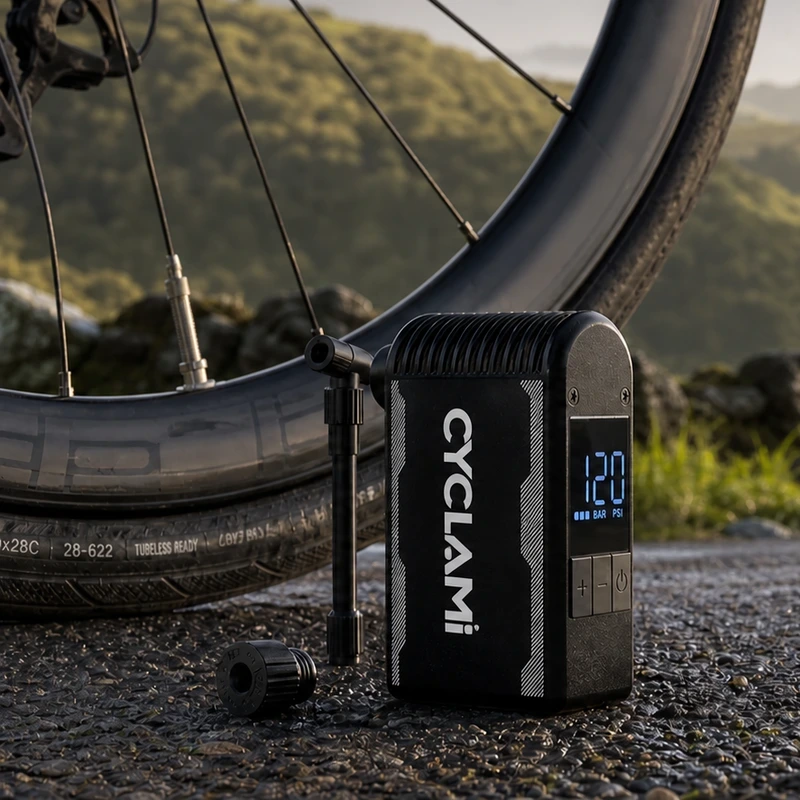
That sensitivity has two practical consequences. First, adjust in 2 PSI steps when tuning, never 5 — our wrong-pressure symptom guide tells you which direction to move. Second, your inflation tool needs to be accurate at low pressures, where floor-pump needle gauges are at their vaguest and thumb-calibration is hopeless. A digital gauge with a preset — set 31 PSI, it stops at 31 PSI — stops being a convenience and becomes the tuning instrument. This is honestly where the pocket-sized CYCPLUS A2S we sell (AS2, in the official family spelling) earns its place on a gravel bike: ±1 PSI claimed accuracy and an auto-stop preset are exactly the tolerances this discipline runs on.
UK surfaces change the answer more than maps admit
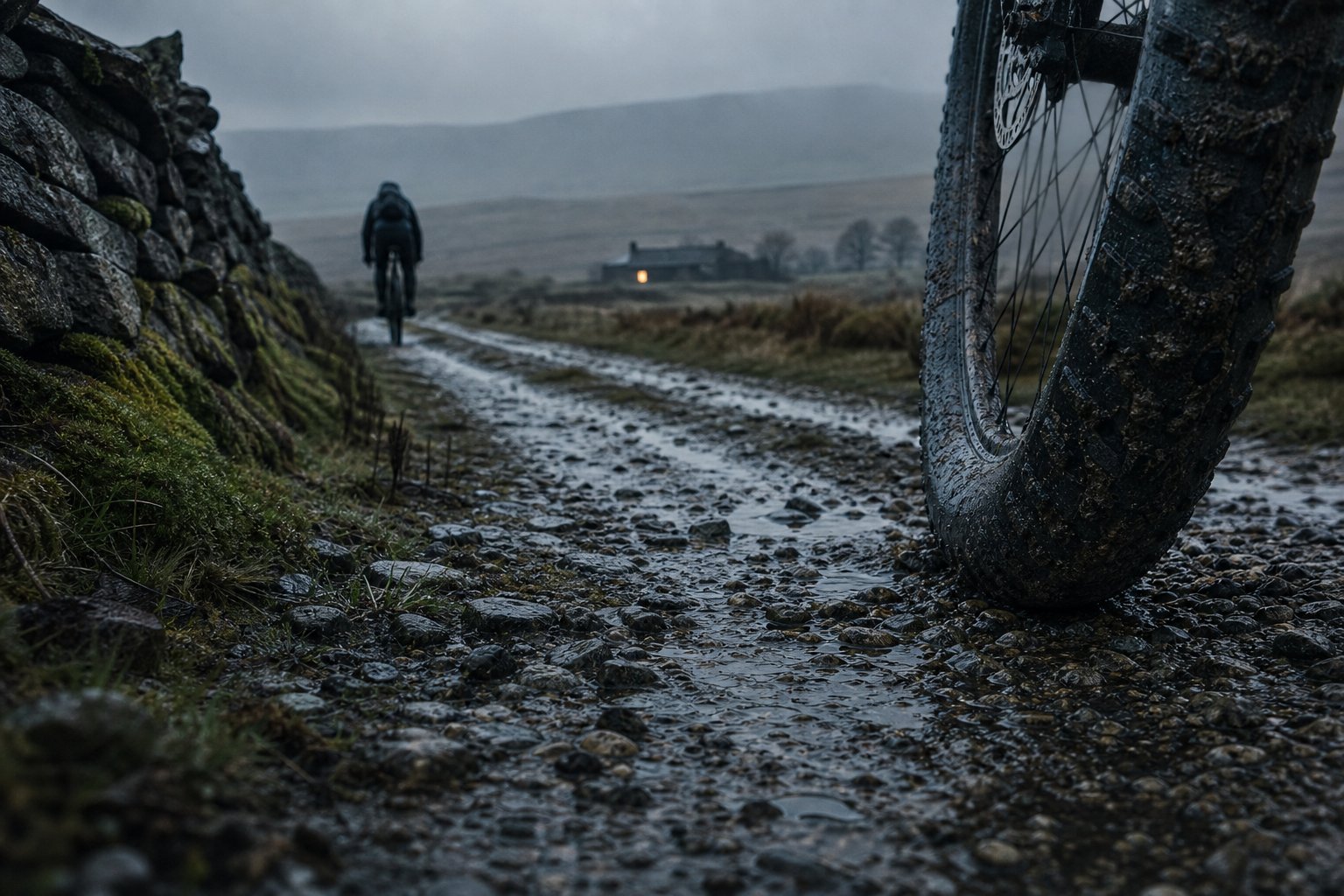
British gravel is not Kansas gravel: a single UK ride can string together towpath, rutted byway, forestry road and a mile of farm mud, and each argues for a slightly different pressure. You cannot re-inflate at every gate, so the skill is knowing which surface dominates today’s route and setting for that.
Byways and bridleways — the classic UK mix of stone, ruts and seasonal mud — reward the middle of your range: enough pressure to protect rims from hidden stone edges, low enough to grip off-camber ruts.
Forestry access roads run firmer and faster; the top of your range rolls best and the grip penalty is small.
Winter mud is the great equaliser: drop 2–3 PSI from your dry-weather number and the contact patch lengthens exactly when you need it. Combine that with winter’s own physics — cold air reads lower on the gauge, covered in our complete pressure guide — and a January gravel ride can legitimately want 5 PSI less than a June one on the same trail.
Gravel events deserve a deliberate choice the morning of the ride, at the venue, at outdoor temperature — not whatever survived the drive down.
Tubeless, tubes and the rim-strike boundary
Tubeless is the default for good reason at these pressures: no tube to pinch means the low end of every range above is actually usable, and sealant handles the thorn punctures British hedgerow trimming season delivers. What a pocket pump honestly can and cannot do for tubeless is covered in our tubeless guide.
Whichever you run, the hard floor is rim strikes: if you feel the rim clunk through the casing on a stone, you are below the pressure your weight and speed need, whatever any table says. Add 2 PSI and re-test. The ceiling is subtler — a gravel tyre pumped toward its sidewall maximum stops gripping and starts deflecting, which off-road is both slower and more dangerous than the soft end of the range.
A tuning protocol that takes three rides
Ride one: start at the table value for your weight and width, and note where the tyre feels vague or harsh. Ride two: move 2 PSI in the indicated direction — down for harshness and skipping, up for squirm or rim contact. Ride three: confirm, then record your number somewhere permanent, because riders who guess re-derive it every spring.
From then on, pressure is a ten-second preset before each ride, not a decision. One number for dry, one for mud, and you are more precisely set up than most of the field at any UK gravel event.
The wider context — how gravel pressures relate to road, commuting and winter numbers — lives in our complete UK pressure guide; the per-width quick answers are in the FAQ; and the pump built for hitting 31 PSI exactly, every time, is on the product page.
Ready to try CYCLAMI UK?
Shop Now â £73.81