Best GPS Cycling Computers Under £100 in the UK (2024)
Presta or Schrader? How to Tell Which Valve Your Bike Has
Slim stem with a tiny locknut is Presta; a fat car-style valve is Schrader. UK guide to rim holes, adapters, e-bike valves and which pump fits.
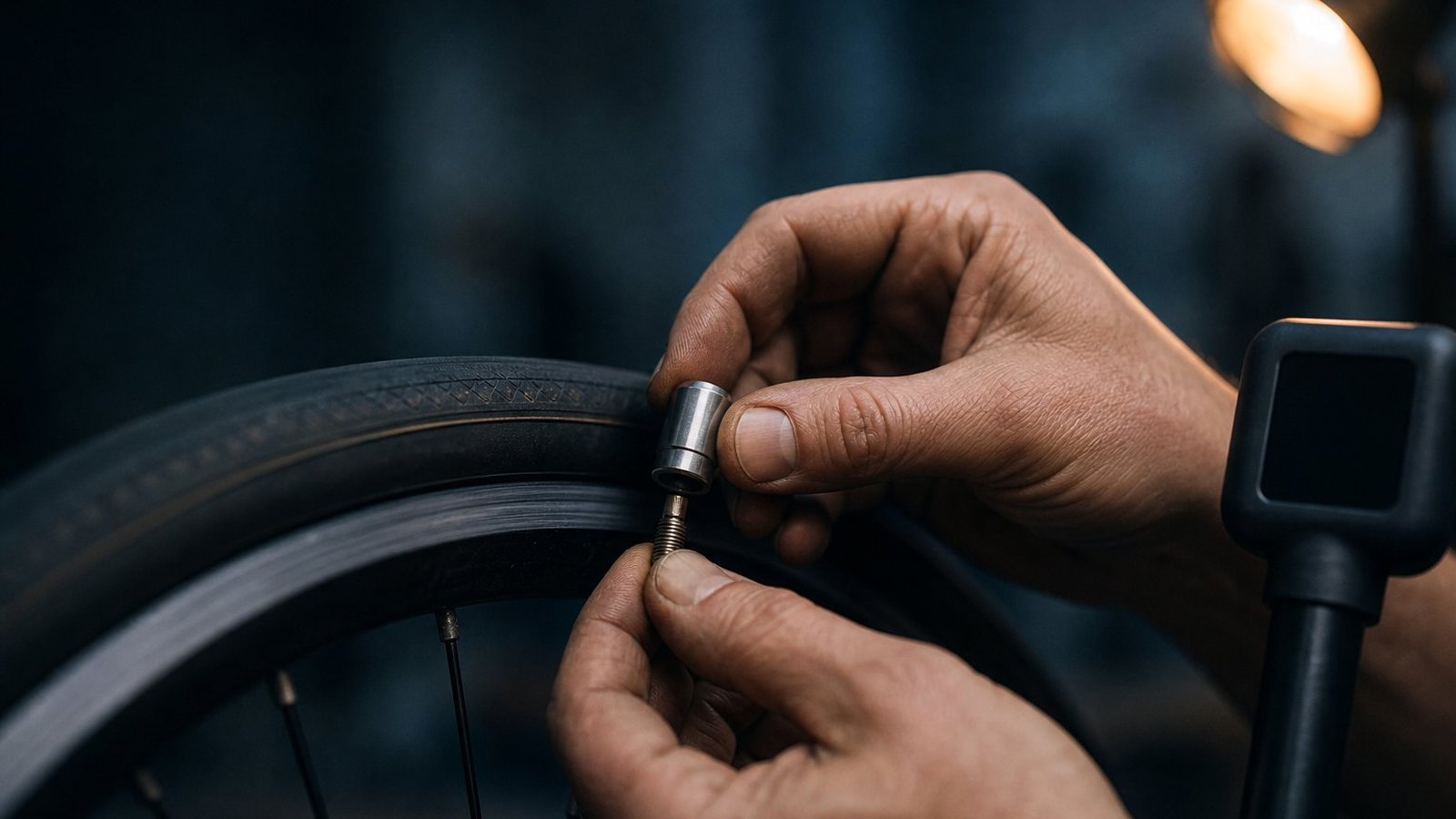
Look at the valve stem. A Presta valve is slim, tapers towards the tip and carries a small knurled locknut you unscrew before pumping. A Schrader valve is fatter — identical to a car tyre valve — with a flat top and a spring-loaded pin in the centre. Thirty seconds at the wheel settles it.
If you’re standing in the shed wondering why the pump won’t go on, this guide covers the rest: what each valve looks like up close, which bikes ship with which, the third type you might meet on a Dutch bike, and how adapters bridge the gap in both directions.
The thirty-second check at the wheel
Pop off the dust cap and look at the metal stem coming through the rim:
- Slim, threaded most of its length, with a tiny knurled nut at the very tip — Presta (also called a French or Sclaverand valve). The stem is about 6 mm across, and nothing goes in or out until that nut is wound upwards.
- Fat and flat-topped, exactly like the valve on your car — Schrader. It measures about 8 mm across, with a spring-loaded pin recessed in the centre that the pump head presses to open.
- Fat base, a large collar nut clamping it to the rim, and a removable barrel inside — Dunlop (also called Woods), the third type, covered below.
Can’t get at the wheel right now? The caps are a clue on their own: Presta caps are long, slender and pointed, while Schrader caps are the short stubby domes you see on cars. Caps do get lost and swapped, though, so confirm against the stem before ordering inner tubes.
Presta vs Schrader at a glance
| What to check | Presta | Schrader |
|---|---|---|
| Stem diameter | Slim — about 6 mm | Fat — about 8 mm, same as a car valve |
| Rim hole | Small (6.5 mm drilling) | Large (8.5 mm drilling) |
| Lock nut | Knurled nut at the tip; must be opened before inflating | None — a spring-loaded centre pin seals the valve |
| Cap style | Long, slender, pointed | Short, stubby, car-style |
| Typical bikes | Road, gravel, modern mountain bikes, performance e-bikes | Kids’ bikes, budget hybrids, BMX, utility e-bikes |
| Petrol station air | Only with an adapter | Fits directly — use short bursts |
The diameter difference is the bit that matters, because it is drilled into your wheel. A rim with the small 6.5 mm valve hole physically cannot accept a Schrader tube, while a Schrader-drilled rim will take a Presta tube only if a reducer grommet fills the spare space. Your rim, not your preference, decides which tubes you buy.
Which bikes ship with which valve?
- Road and gravel bikes: Presta, almost without exception. The smaller hole removes less material from a narrow rim — and the valve hole is the weakest point of any rim.
- Modern mountain bikes: mostly Presta these days, particularly anything tubeless-ready, since the vast majority of tubeless valves are Presta-pattern.
- Hybrids: genuinely mixed. Sportier flat-bar bikes lean Presta; comfort and budget models lean Schrader.
- Kids’ bikes and BMX: Schrader nearly every time — tougher, cheaper and easy to top up anywhere.
- Dutch-style town bikes: often neither; see the Dunlop section below.
Do e-bikes have Schrader or Presta valves?
Both, depending on the flavour of e-bike. Folding, utility and budget commuter e-bikes usually arrive with Schrader valves on wider rims; performance road, gravel and trail e-bikes generally run Presta. Check the stem before buying spares, because an e-bike wheel obeys the same rule as any other: the drilling decides. And since e-bikes are heavier and harder on tyres than push bikes, keeping pressure right matters even more — our guide to choosing an electric pump for an e-bike covers that side of it.
The third type: Dunlop (Woods) valves
If the family fleet includes a Dutch bike, an older German tourer or something inherited, you may find a Dunlop valve: a fat base like a Schrader (it uses the same rim drilling) topped by a narrower threaded section under a big collar nut. The confusing part is that it inflates with a Presta-style pump head rather than a Schrader one, and its internals can be replaced without tools. Dunlop valves are still everywhere in the Netherlands, Germany and Japan, but rare on new bikes sold in the UK.
Why won’t my pump fit on my bike valve?
Nine times out of ten it is one of these:
- Wrong head for the valve. A Schrader chuck is too big to seal on a slim Presta stem, and a Presta-only head cannot depress a Schrader’s centre pin.
- The Presta locknut is still closed. Wind it fully upwards and press the tip briefly to free it before attaching the pump — our step-by-step Presta inflation guide walks through it.
- It’s actually a Dunlop valve. Use the Presta setting or adapter, not the Schrader one.
- The stem is too short for a deep rim. The usual recommendation is a stem at least 10 mm longer than the rim is deep; any less and the head has nothing to grip.
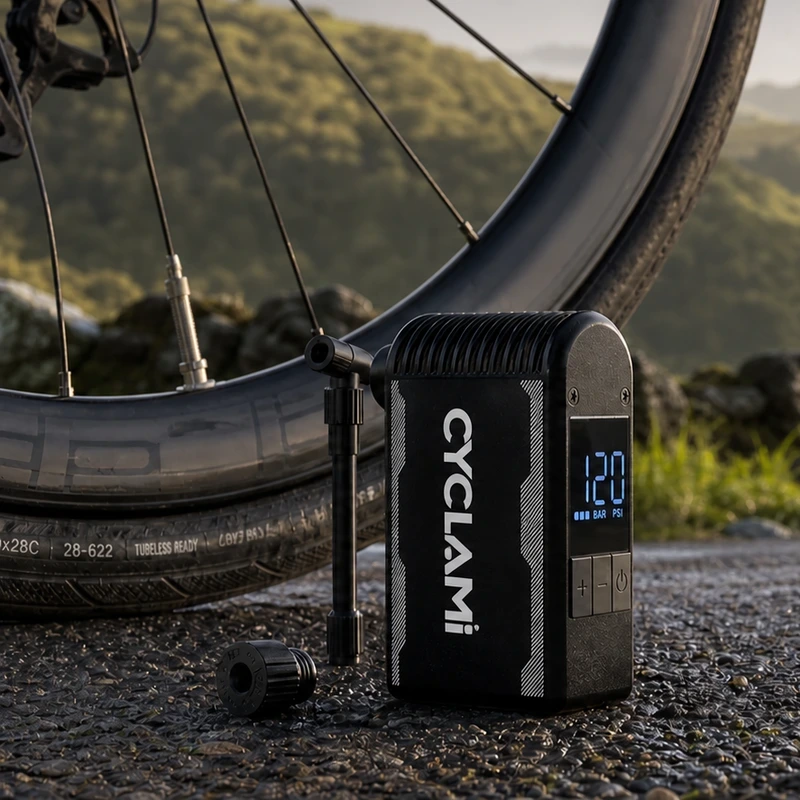
Why do some pump heads fit both valves? Floor pumps use twin-hole heads or reversible internals, and many mini pumps use a push-on head with a stepped rubber gasket that grips either size. Electric pumps usually take a third route: a screw-on chuck with interchangeable adapters. The CYCLAMI A2S we sell (£73.81) includes both Presta and Schrader adapters in the box, along with an extension hose and a ball needle, so one pocket-sized pump covers the road bike and the kids’ BMX alike.
If a Presta valve takes air happily but the tyre is soft again by morning, suspect the valve rather than the pump — see why Presta valves lose air.
How a Presta to Schrader adapter works — and the reverse
A Presta-to-Schrader adapter is a small brass sleeve that screws onto the threads of a Presta stem once the locknut is open. Its outer profile mimics a Schrader valve, so any car-style chuck — including forecourt airlines — can seal over it, and the pump’s own pressure pushes the Presta core open. Inflate, unscrew the adapter, close the locknut, refit the cap. Two cautions: open the locknut first, because the adapter doesn’t do that for you, and treat petrol-station compressors gently — they move a lot of air very quickly, so add it in short bursts and check with a gauge as you go.
Going the other way is really two different problems:
- Pump side: if a pump head only speaks Presta, a small barrel adapter converts it for Schrader valves. Most modern pumps make this unnecessary.
- Rim side: a Presta tube can sit in a Schrader-drilled rim with a reducer grommet taking up the extra space. The reverse — drilling a Presta rim out to 8.5 mm to accept a Schrader tube — is a bad idea: you are enlarging the hole at the rim’s weakest point, and it can void the wheel’s warranty.
What this means when you’re buying
- Tubes: match the valve to the rim drilling, and match the stem length to the rim depth — deep-section aero wheels need long-stem valves or extenders.
- Pumps: buy one that handles both valves out of the box, whether that’s a twin-hole track pump from Halfords or an electric pump with both adapters supplied. On the A2S you preset a target anywhere from 0 to 120 PSI (about 8.3 bar) and it stops itself there, and the routine is identical whichever valve the bike has. If you’re unsure what number to aim for, our UK bike tyre pressure guide covers it.
- The new kid: Schwalbe’s Clik Valve, launched in 2024, keeps Presta’s outer diameter — so it fits Presta rims — but lets a matching pump head click straight on with no locknut, and Schwalbe claims markedly higher airflow for tubeless use. We’ve written up what the Clik Valve means for electric pump users separately.
- Carry the little brass adapter anyway. It weighs a few grams, costs a few pounds at any UK bike shop, and turns every forecourt airline in the country into your emergency pump.
Frequently asked questions
Can I tell which valve I have without taking the cap off?
Usually, yes. Presta valves wear long, slender, pointed caps on a visibly thin stem; Schrader valves wear short, stubby, car-style caps on a fat stem. Caps get lost and swapped between bikes, though, so if you’re about to order inner tubes or a pump, take the cap off and check the stem itself — the knurled locknut at the tip is the giveaway that you’re looking at a Presta.
Do I have to unscrew the little nut on a Presta valve completely?
Wind the knurled locknut upwards as far as it goes — on most valves it stays captive rather than coming off. Then press the tip briefly until you hear a puff of air, which confirms the core isn’t stuck. After inflating, wind it back down finger-tight. An open locknut doesn’t leak by itself, because tyre pressure holds the valve shut, but closing it stops the core being nudged open by knocks or vibration.
Can I fit a Schrader tube in a rim drilled for Presta?
No — the stem is about 2 mm too fat to pass through the hole. Some people drill rims out to make it fit, but you’re removing material at the wheel’s weakest point and potentially voiding its warranty, so we’d advise against it. The other direction works fine: a Presta tube sits happily in a Schrader-drilled rim, provided you add a reducer grommet so the slim stem can’t chatter about in the oversized hole.
Are Presta valves better than Schrader valves?
Neither is better; they solve different problems. Presta’s slim stem suits narrow, highly stressed rims and most tubeless setups, but its exposed core is more delicate. Schrader is tougher, simpler for children to manage, and compatible with car inflators everywhere, at the cost of a bigger rim hole. Ride whatever your rims are drilled for, and carry the right adapter so the difference never strands you at the roadside.
Ready to try CYCLAMI UK?
Shop Now â £73.81