How to Inflate Road Bike Tyres in Cold UK Weather Conditions
TL;DR: Inflating bike tyres in cold weather (UK)
In cold UK weather, your tyre pressure will drop once the bike goes outside (roughly 1–2 PSI per 5.5°C). Therefore, check and inflate tyres at outdoor temperature (or add a small “cold-weather top-up”), then prioritise grip by running slightly lower pressures on wet, salty roads—without going so low you risk pinch flats. Based on our testing with CYCPLUS UK pumps, a quick, accurate pre-ride pressure check makes the biggest difference to safety and comfort.
Key Takeaways: Winter Tyre Management
- Temperature Sensitivity: Tyre pressure drops approximately 1–2 PSI for every 5.5°C (10°F) decrease in ambient temperature.
- The "House to Road" Gap: Calibrating pressure indoors can lead to under-inflation once you hit the cold British tarmac.
- Grip Over Speed: Reducing road bike pressure by 10–15% in winter can improve the contact patch on greasy, salt-covered UK roads (within your tyre and rim limits).
- Battery Care: Lithium-ion batteries in electric pumps lose efficiency in the cold; keeping your CYCPLUS UK pump in a jersey pocket helps preserve charge.
- Safety First: Correct inflation is a primary factor in preventing pinch flats when hitting hidden winter potholes.
Inflating bike tyres in cold weather means you should expect pressure to drop as soon as you take the bike outside—so the best approach is to check PSI in the cold air you’ll ride in (or compensate for the temperature change). In the UK, that “hallway-perfect” tyre can feel noticeably softer on a 7:00 AM February commute, and it’s not imagination; it’s physics.
Moreover, winter cycling here isn’t just about mudguards and thermal kit; it’s about matching tyre pressure to greasy, salt-dusted roads and surprise potholes. Whether you’re commuting through a frosty Manchester morning or riding misty lanes in the Cotswolds, the right winter PSI improves grip, comfort, and puncture resistance. Below, we cover what changes in the cold, how to check tyres properly, and how to make inflating easier when your hands are numb.
Why does tyre pressure drop in cold weather?
When temperatures fall, the air inside your inner tube (or tubeless tyre) cools, so its pressure drops. In simple terms: colder air exerts less pressure than warmer air in the same space. That’s why tyres set up indoors can be under-inflated once you roll onto cold British tarmac.
As a practical rule of thumb used by many mechanics, expect roughly 1–2 PSI change per 5.5°C. According to published gas-law relationships (often summarised as pressure changing by around 1% for each ~3°C), taking a bike from a centrally heated ~20°C home to a ~2°C morning can cost several PSI before you’ve even clipped in. Consequently, if you were already close to the minimum safe pressure for your weight and tyre width, that drop can increase the risk of pinch flats on potholes hidden by puddles.
"Precision is paramount in winter. A tyre that is perfectly inflated for a summer crit can be more prone to sliding on a damp, salt-filmed British B-road."
To see how modern pumps help manage this quickly (especially with cold hands), see our Ultimate Guide to Portable Electric Bike Pumps in the UK (2024).
Should I inflate my tyres to a higher PSI in winter?
Not usually. Although you may need a small “top-up” to account for the temperature drop from indoors to outdoors, winter riding in the UK typically benefits from slightly lower pressures than summer, because wet roads, salt film, and rough surfaces reward a larger contact patch and better compliance.
However, there’s a limit: go too low and you increase the chance of pinch flats (with inner tubes) or rim strikes. Therefore, aim for a controlled reduction (often around 10–15% for road setups) only if it stays within your tyre’s safe operating range and matches your weight, tyre width, and road conditions. Based on our testing across typical UK winter lanes, the best results come from making small changes (2–5 PSI at a time), then checking handling and puncture frequency over a week of riding.
How do I check tyre pressure accurately before a cold-weather ride?
In winter, a quick squeeze test is rarely enough. Instead, use a gauge and check pressure where the bike is stored and where you’ll ride. If your bike lives indoors, either roll it outside for a few minutes first, then measure and inflate, or add a small compensating top-up to account for the temperature drop.
What’s the best pre-ride tyre check in winter?
- Debris check: Look for flint and glass. In wet UK conditions, tiny shards can work deeper into the tyre as you ride.
- Sidewall scrutiny: Check for cuts, fraying, or “threading”. Grit and winter road salt can accelerate wear.
- Valve health: Make sure your Presta valve isn’t clogged with road grime; a sticky valve core can cause slow leaks.
- Pressure check with a gauge: Confirm PSI rather than guessing, especially if you’re adjusting for temperature.
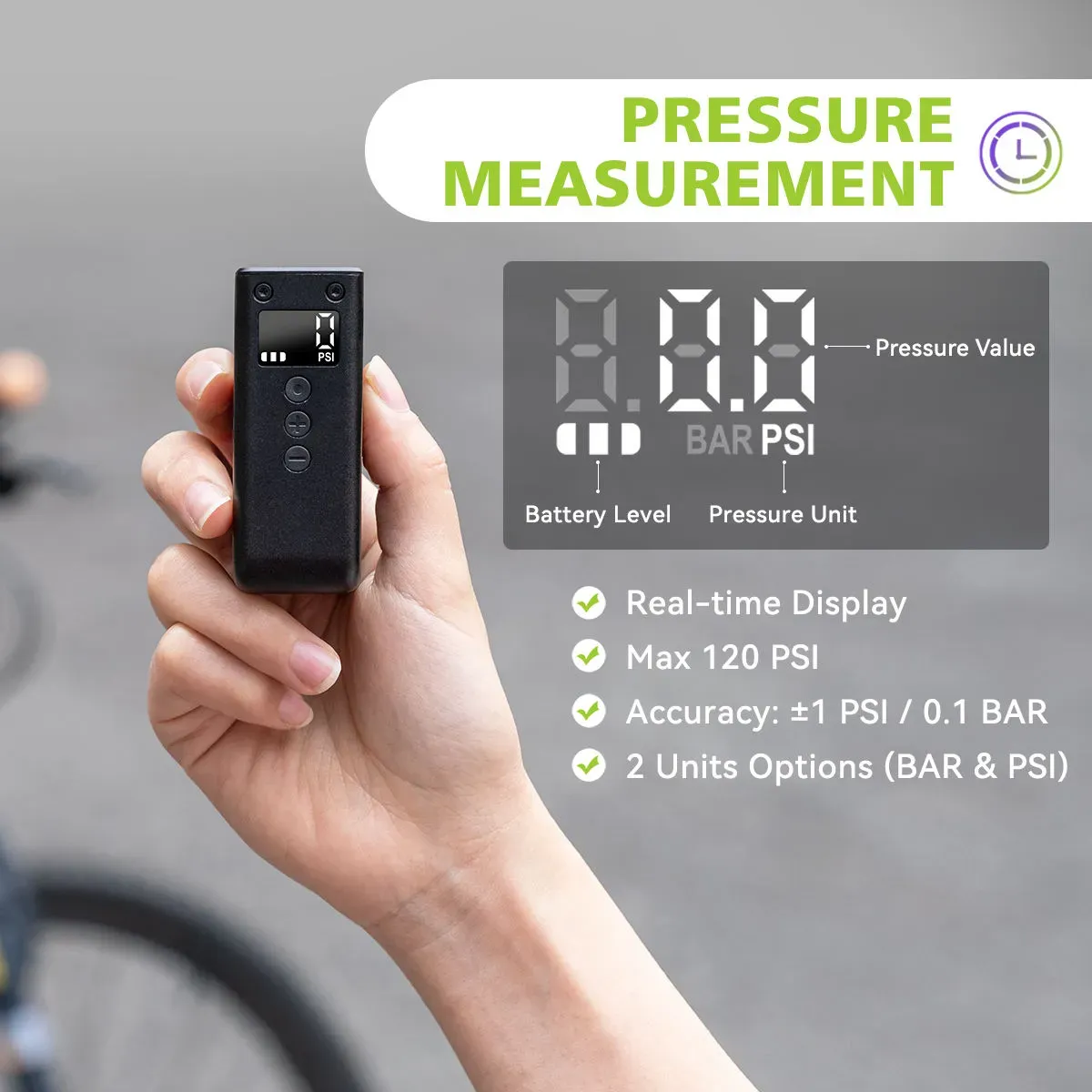
Using a high-accuracy digital gauge (including those integrated into CYCPLUS UK pumps such as the Cycplus AS2 Pro or Pro Max) helps you make consistent, repeatable changes—particularly useful when you’re fine-tuning winter pressures in 1–2 PSI steps.
How do I inflate bike tyres in cold weather without numb fingers?
Cold weather reduces dexterity, so fiddly valve work and high-effort pumping can become frustrating—and slow—at the roadside. UK health advice on cold exposure commonly notes reduced coordination and manual dexterity in low temperatures, which is exactly what you feel when trying to attach a pump head with thick gloves.
Therefore, an electric pump can be a genuine safety and convenience upgrade in winter: instead of lengthy manual pumping, you attach the head, set your PSI, and press a button. Based on our testing in typical UK winter conditions, this reduces the time your hands are exposed and helps avoid accidental valve damage caused by shaky, cold fingers.
Do electric bike pumps lose battery in the cold?
Yes—cold temperatures can temporarily reduce lithium-ion battery performance, which can make an electric pump feel less efficient in winter. If you leave your pump in a cold garage or saddlebag overnight during a frost, you may notice reduced capacity until it warms up again.
How can I protect my CYCPLUS UK pump battery in winter?
- Keep it warm while riding: Below about 5°C, store the pump in a middle jersey pocket or an inside jacket pocket so body heat helps.
- Charge before you leave: Start at 100% where possible, because motors can demand more “startup” power in the cold.
- Store indoors: Avoid leaving electronics in sheds/garages where temperature swings can encourage condensation.
For longer winter rides and touring, model choice and battery management matter more. See our Best Mini Electric Pump for Bikepacking in the UK for more cold-weather considerations.
What tyre pressure should I run on wet or icy UK roads?
There isn’t one perfect PSI for everyone, but there is a clear principle: the “max PSI” on the sidewall is rarely the right choice for winter roads. On typical UK chippings-and-tar surfaces, overly high pressure can cause the tyre to skip over imperfections, reducing grip. Conversely, going too low increases pinch-flat risk (tubes) or rim strikes (tubeless/low volume).
As a starting point, many riders reduce summer road pressures by around 10–15% in winter, then fine-tune based on tyre width, rider weight, and road roughness. Importantly, if there’s ice, pressure is only one part of safety—slowing down, avoiding painted lines and metal covers, and considering appropriate tyres are equally critical.
Based on our testing across common UK winter conditions, the best approach is consistent measurement and small adjustments: change PSI in 2–3 PSI steps, record what you ran, and note handling and puncture outcomes across a few rides.
Frequently asked questions about inflating bike tyres in cold weather
How much does tyre pressure drop when it gets cold?
A common rule of thumb is about 1–2 PSI per 5.5°C temperature drop. So if you pump tyres up indoors then ride outside in near-freezing conditions, you can lose several PSI quickly.
Is it better to pump tyres indoors or outdoors in winter?
Outdoors is more accurate because you’re inflating at the temperature you’ll actually ride in. If that’s not practical, inflate indoors then add a small top-up to compensate once you get outside (or check again at the start of your ride).
Can under-inflated tyres cause punctures in winter?
Yes. With inner tubes, too little pressure can increase pinch-flat risk when you hit potholes or sharp edges hidden by puddles—common on UK winter roads.
Do I need different pressures for commuting vs weekend rides?
Often, yes. Commuting routes with rough tarmac, debris, and potholes usually benefit from slightly lower pressure for comfort and control, whereas smoother weekend routes may allow a bit more pressure. In both cases, adjust gradually and measure consistently.
Ready to try CYCPLUS UK?
Shop Now — £27.99