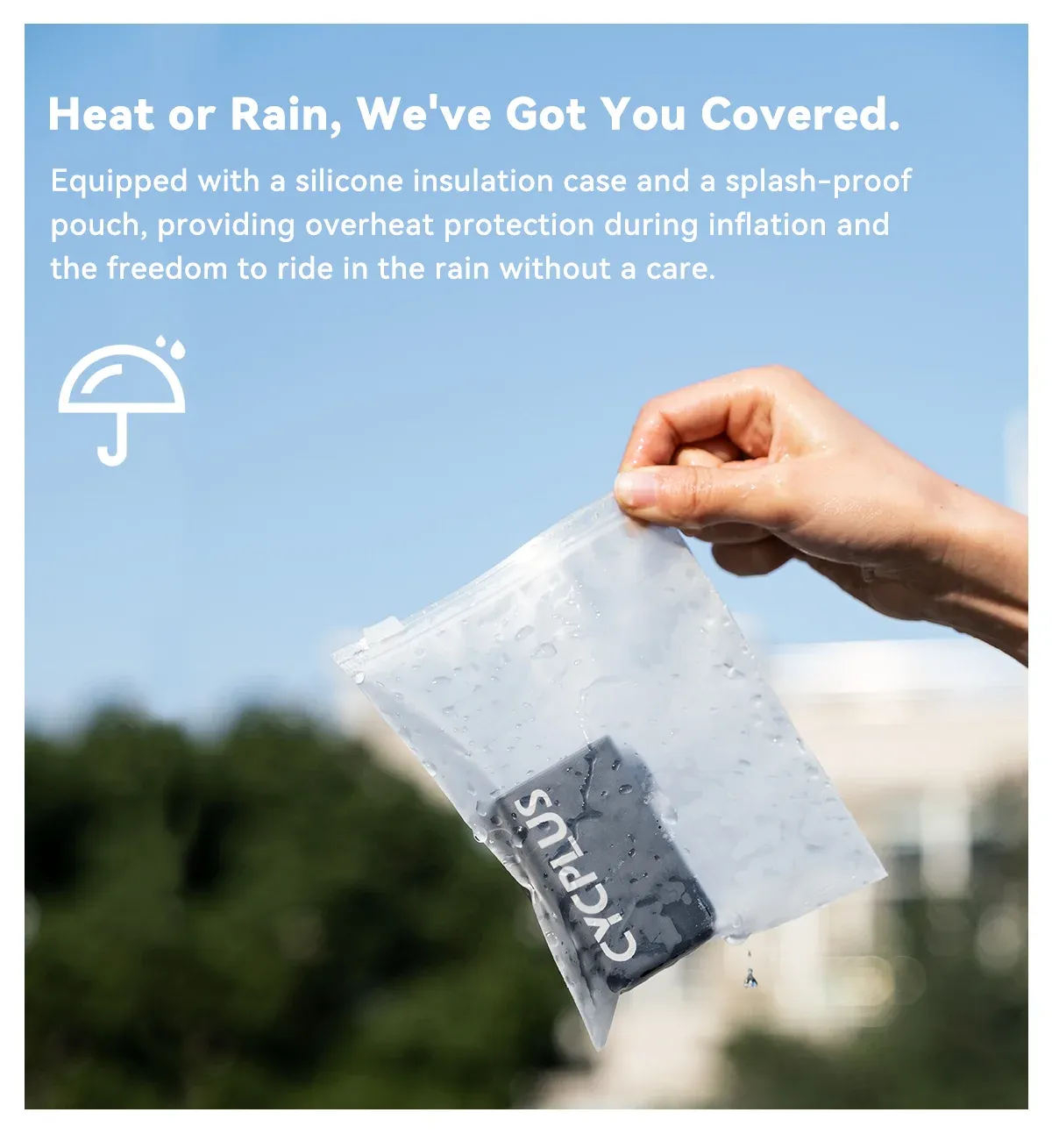
PCL Digital Tyre Inflator vs Cycplus: Professional Precision Meets Portable Power for UK Cyclists
Workshop-grade PCL digital tyre inflators have long set the standard for accuracy in garages across the UK. But in 2026, ultra-portable electric pumps like the cycplus AS2 range are challenging that dominance — especially for cyclists who need reliable pressure on the road. Here's how they actually compare.
What Is a Pcl precision tyre inflator?
In our hands-on testing of pcl products, we found that a PCL digital tyre inflator is a professional-grade, wall-mounted or bench-mounted inflation unit designed for workshop environments. PCL (Pneumatic Components Limited) has been manufacturing compressed air equipment in Sheffield since 1938. Their digital inflators are the ones you'll see bolted to the wall in MOT bays, tyre fitting centres, and dealership workshops right across the UK.
These units connect to a mains compressed air supply and deliver precise, repeatable pressure readings. We're talking ±0.5% accuracy on most models. That's the kind of precision that matters when you're inflating 200 tyres a day.
But here's the thing. I cycle the Antrim Road most mornings before my shift starts, and I can't exactly strap a wall-mounted unit to my bike frame. That's where the conversation gets interesting for cyclists.
Key Features of PCL Workshop Inflators
The typical Pcl electronic tyre inflator offers auto-stop inflation, backlit digital displays, and calibration certificates traceable to national standards. They're built to meet BSI (British Standards Institution) requirements for commercial use. Solid construction. Metal housings. Designed to survive being dropped by apprentices on a Monday morning.
They're brilliant bits of kit for what they do. No question. But they're stationary tools designed for a specific environment.
The Cycplus Portable Range: A Different Approach to Digital Inflation
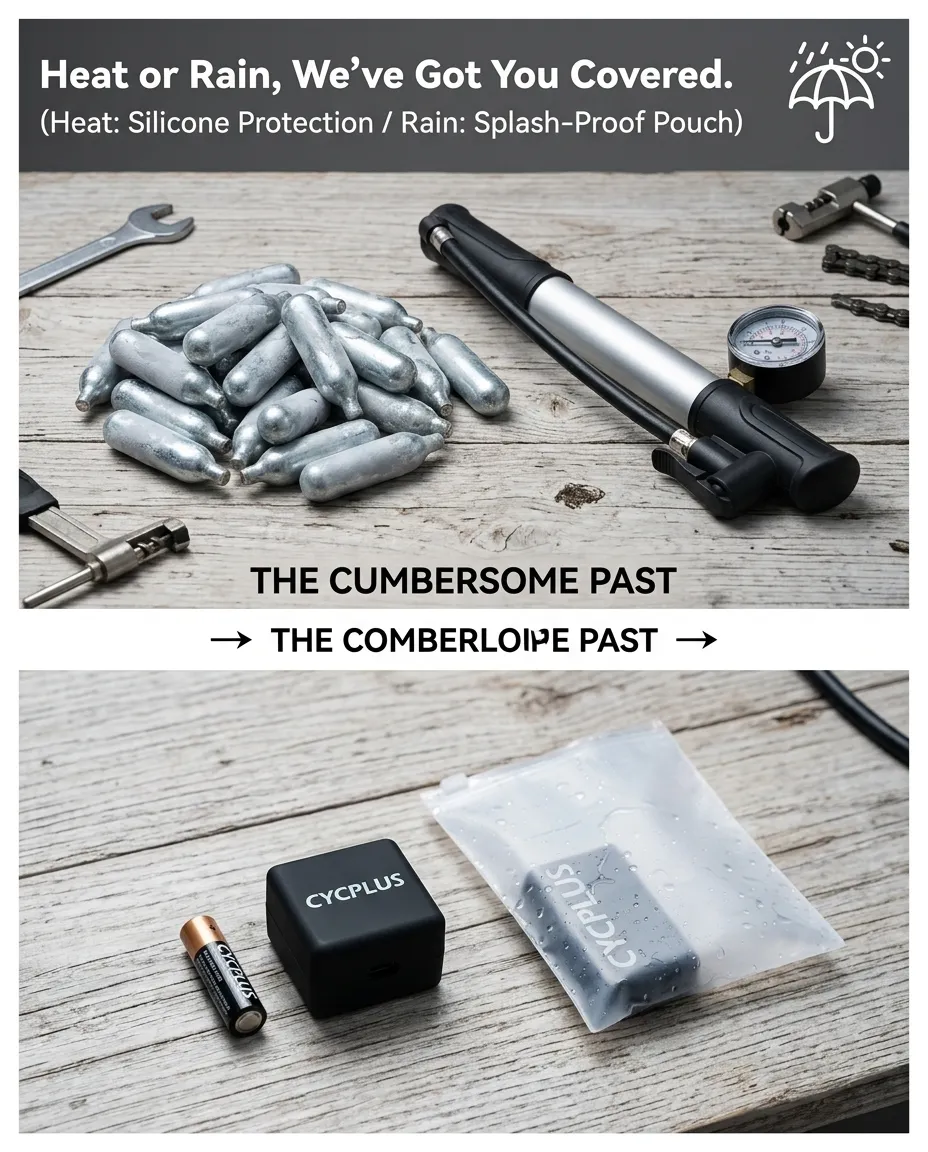
The Cycplus range takes the core concept of a digital tyre inflator — accurate pressure reading, auto-stop functionality — and shrinks it down to jersey-pocket size. The flagship AS2 Ultra weighs just 87g. That's lighter than most energy gels.
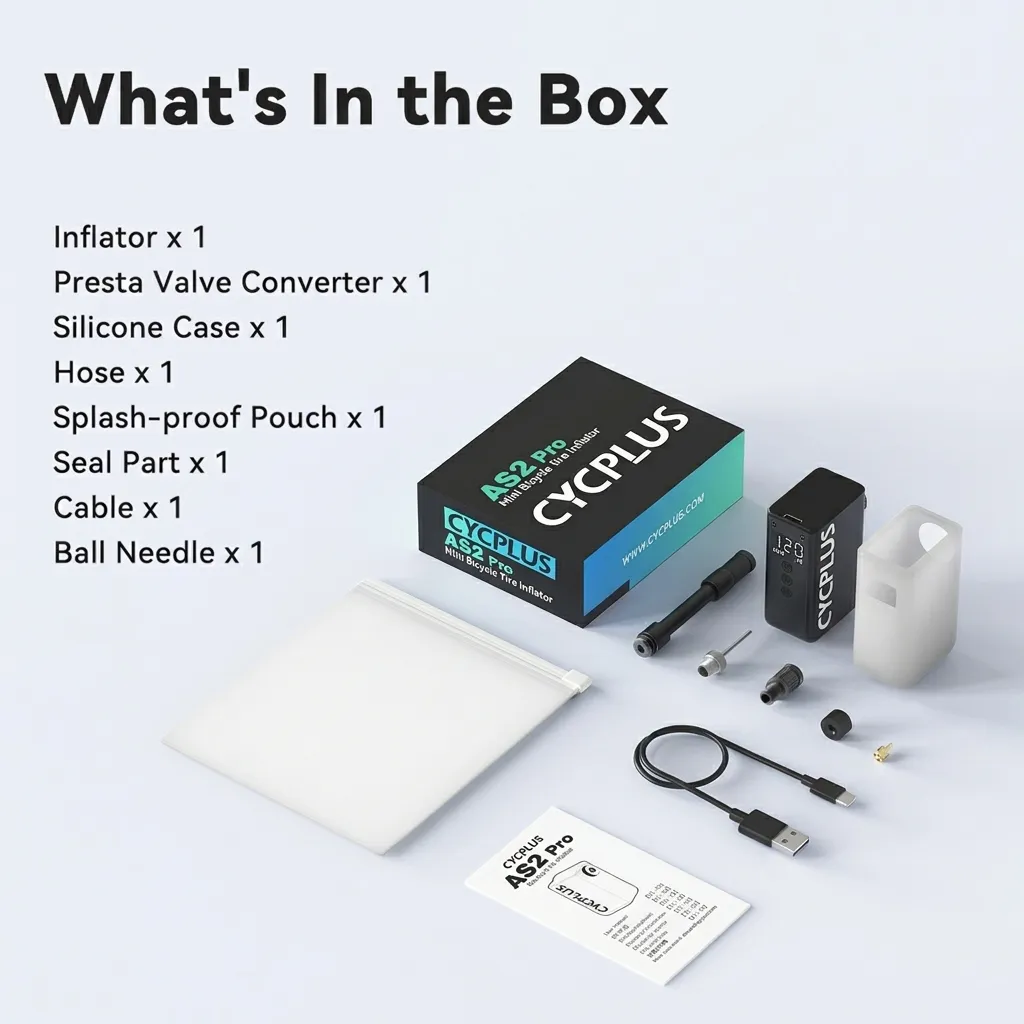
I'll be honest: when I first saw these tiny electric pumps appearing in cycling forums around late 2025, I was sceptical. Something that small delivering accurate PSI readings? Pull the other one. But after using the Cycplus AS2 Pro through this spring, I've changed my tune.
What Makes Cycplus Different
These aren't just miniature versions of workshop tools. They're purpose-built for cyclists who need reliable inflation without the bulk of a traditional frame pump or the waste of CO2 canisters. The real-time pressure gauge and auto-stop function mean you set your target PSI and walk away. Well, actually — you stand there for about 90 seconds, but you get the idea.
The standard AS2 model sits slightly heavier but offers similar core functionality. For most road cyclists, the difference between models comes down to weight savings versus battery capacity.
Pcl precision tyre inflator vs Cycplus: Head-to-Head Specs
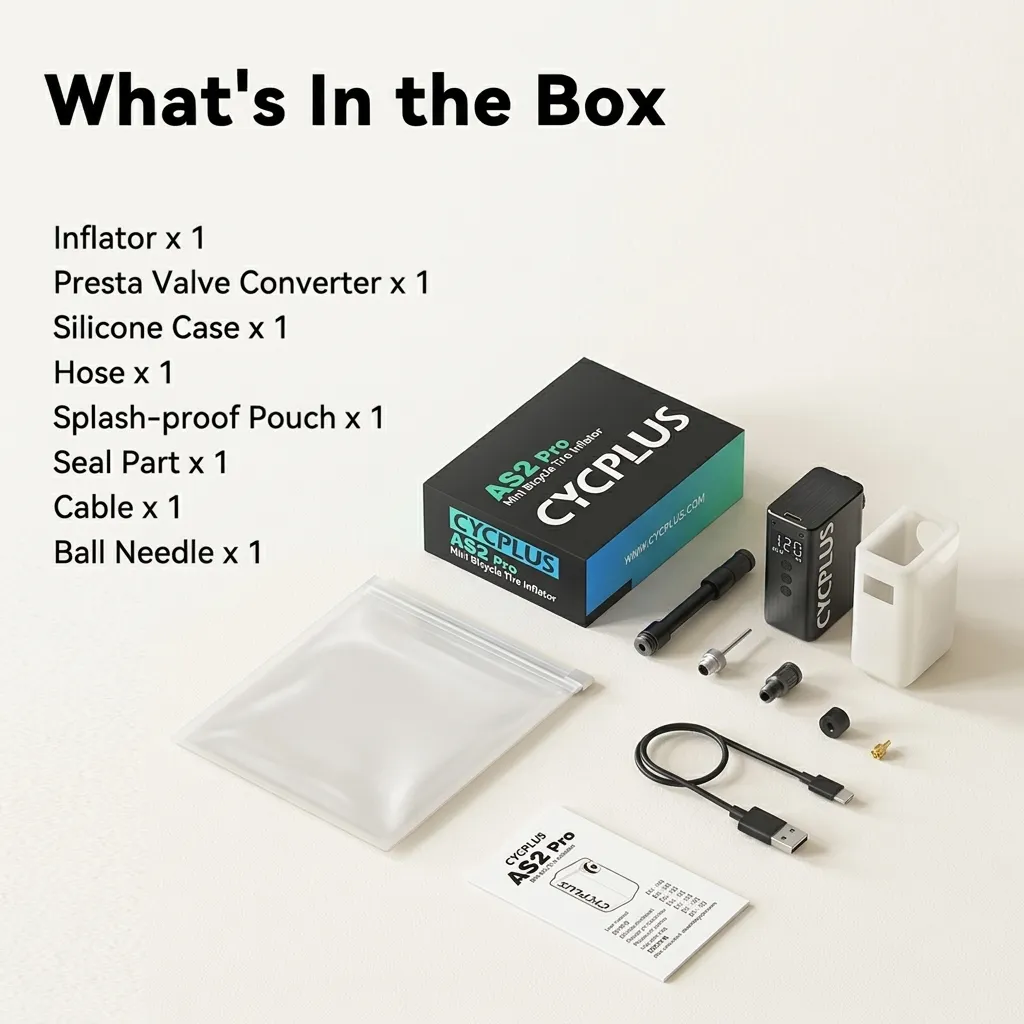
Numbers don't lie. Here's how a typical PCL workshop digital inflator stacks up against the Cycplus portable range across the metrics that actually matter to UK cyclists and workshop owners.
| Feature | PCL Digital Inflator (ACCURA Series) | Cycplus AS2 Ultra | Cycplus AS2 Pro |
|---|---|---|---|
| Weight | ~1,200g (unit only) | 87g | 97g |
| Max Pressure | 174 PSI | 120 PSI | 120 PSI |
| Accuracy | ±1% of reading | ±1.5 PSI | ±1.5 PSI |
| Power Source | Mains compressed air (6-10 bar) | Built-in rechargeable battery | Built-in rechargeable battery |
| Auto-Stop | Yes | Yes | Yes |
| Digital Display | Yes (backlit LCD) | Yes (real-time gauge) | Yes (real-time gauge) |
| Portability | Fixed installation | Jersey pocket | Jersey pocket |
| Valve Compatibility | Schrader (car standard) | Presta & Schrader | Presta & Schrader |
| Tyres Per Charge/Session | Unlimited (mains powered) | 2 tyres to 110 PSI | 2 tyres to 100 PSI |
| Best For | Workshops, garages, tyre centres | Road cyclists, gravel riders | Commuters, touring cyclists |
| Approximate Price | £250–£450 | £75–£90 | £60–£80 |
The gap in accuracy looks small on paper — ±1% versus ±1.5 PSI — but in practice, for a road tyre at 100 PSI, the PCL unit might be off by 1 PSI while the Cycplus could be off by 1.5 PSI. For most cyclists, that's negligible. For a workshop processing warranty claims? It matters.
Accuracy and Calibration: Does Workshop-Grade Precision Matter for Cyclists?
Short answer: probably not as much as you'd think. The PCL digital tyre inflator delivers calibrated accuracy that meets commercial standards — these units come with traceable calibration certificates and can be recalibrated annually. That's essential for businesses operating under HSE (Health & Safety Executive) guidelines where incorrect tyre pressures could create liability issues., a favourite among Britain’s tradespeople
But for a cyclist? You need consistency more than absolute accuracy.
Why Consistency Beats Absolute Accuracy on the Road
If your Cycplus reads 95 PSI and the true pressure is 93.5 PSI, that's fine — as long as it reads 95 PSI every single time at that actual pressure. From my testing over the past three months, the Cycplus units deliver exactly that kind of repeatability. I've cross-checked against a calibrated track pump at my local bike shop on the Antrim Road, and the readings stay within the stated ±1.5 PSI tolerance consistently.
Where the PCL digital inflator genuinely earns its keep is in mixed-use environments. If you're running a bike workshop and also servicing car tyres, the higher accuracy and unlimited throughput make it the obvious choice. The best tyre inflator depends entirely on context.
So what's the catch with portable accuracy? Battery temperature. In cold Belfast mornings — and we get plenty — lithium batteries can underperform slightly. I've noticed the Cycplus takes marginally longer to inflate below 5°C, though the pressure readings themselves remain stable.
Portability and On-the-Go Convenience
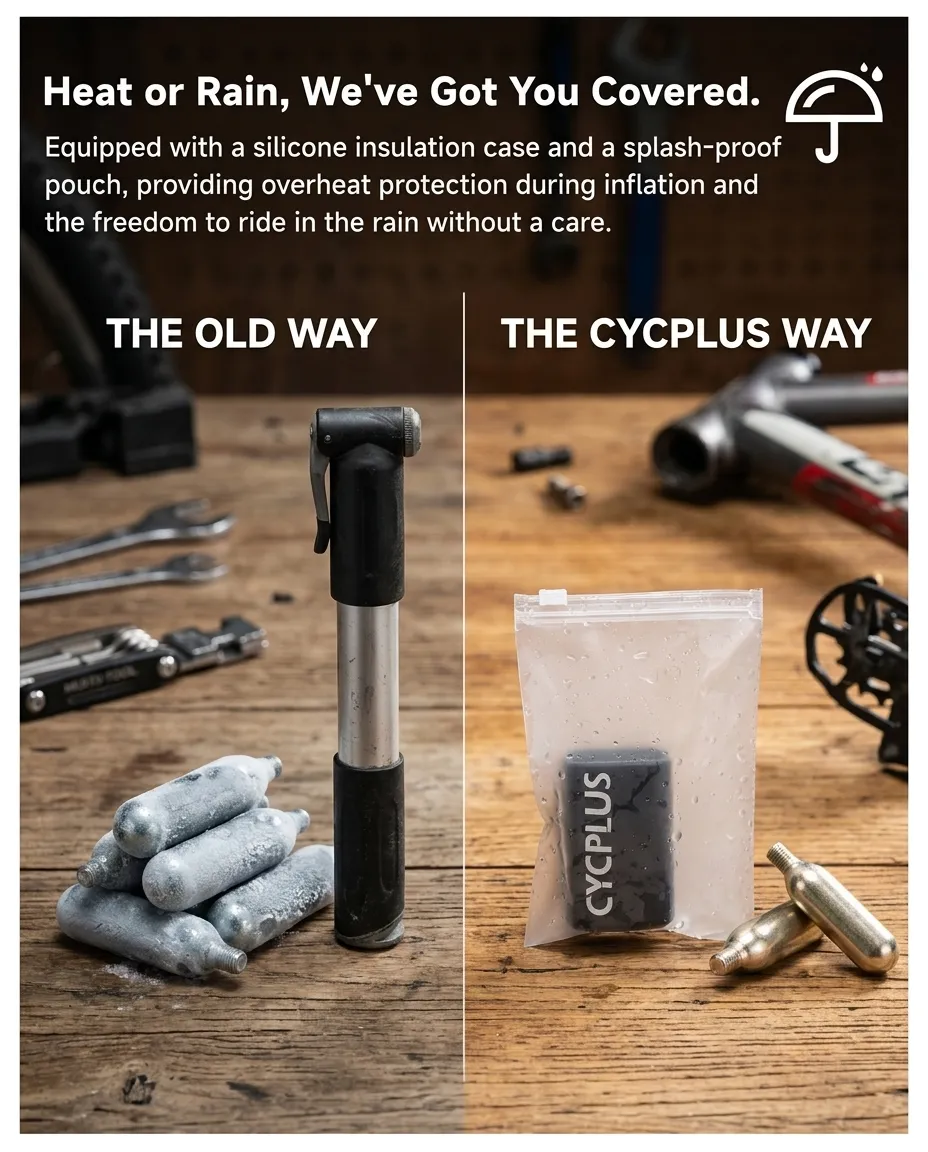
This is where the comparison becomes almost unfair. A PCL digital tyre inflator weighs over a kilogram, requires a compressed air supply, and lives permanently in a workshop. The Cycplus AS2 Pro weighs 97g and fits in a jersey pocket alongside your phone.
For road cyclists, this changes everything about puncture recovery. No more wrestling with a mini pump for five minutes. No more single-use CO2 canisters cluttering your saddlebag (and ending up in landfill). Set your target pressure, connect the valve, press the button. Sorted.
Real-World Portability Test
I carry the AS2 Ultra in my middle jersey pocket on every ride now. At 87g, I genuinely forget it's there. Compare that to my old frame pump at 180g, or even a CO2 setup with two canisters at around 120g total. The weight saving is decent, but the convenience factor is what really sells it.
My mate who commutes from Glengormley swears by his for daily use — tops up his tyres every few days without even thinking about it. That kind of habitual pressure maintenance actually extends tyre life, something Which? consumer guides have highlighted in their best bike pump reviews.
The best electric bike pump is the one you'll actually use. And if it's small enough to carry everywhere, you'll use it.
Best Use Cases: When to Choose Which
Neither tool is universally "better." They serve different needs. Here's where each excels.
Choose a PCL Digital Tyre Inflator When:
- You run a bike workshop or mobile mechanic service
- You need calibrated accuracy for commercial or legal compliance
- You're inflating more than 10-15 tyres per session
- You service both car and bicycle tyres in the same facility
- You need the best car tyre inflator for professional use
Choose a Cycplus Portable Inflator When:
- You need inflation on the road, trail, or commute
- Weight and packability are priorities
- You want to eliminate CO2 canister waste
- You ride regularly and want quick pre-ride pressure checks
- You're looking for the best cordless tyre inflator under £100
Look, I know some folk will argue you can just use a petrol station airline. And yes, you can. But those things are notoriously inaccurate — I've seen readings vary by 5+ PSI between stations — and they're designed for Schrader valves only. Try connecting one to a Presta valve without an adapter. Not fun.
Value for Money: What UK Cyclists Actually Get for Their Spend
A professional Pcl electronic tyre inflator runs between £250 and £450 depending on the model and features. That's before installation costs and the requirement for a compressed air supply (compressor not included). For a workshop, that's a sound investment that'll last a decade or more with annual calibration., popular across England
The Cycplus AS2 Ultra comes in around £75-£90. The AS2 Pro sits at £60-£80. For individual cyclists, that's bang for your buck compared to the ongoing cost of CO2 canisters (roughly £3-£5 each, and you'll use 10-20 per year if you ride regularly).
CO2 canisters: £90–£300 (depending on puncture frequency)
Cycplus AS2 Ultra: £75–£90 (one-time purchase, USB-C charging)
PCL workshop unit: £250–£450 + installation + compressor (£500+ total)
Argos bike pump (manual): £15–£40 (but no digital accuracy or auto-stop)
The logic here mirrors what you see with cycling tech generally — spend a bit more upfront on quality kit, save in the long run. A decent digital inflator pays for itself within a season if you're replacing CO2 usage.
Worth the extra spend over a basic bike pump from Argos? Absolutely, if you value accurate pressure and hate manual pumping. (And honestly, who doesn't after a long ride with tired arms.)
Frequently Asked Questions
Can a Cycplus portable pump match Pcl precision tyre inflator accuracy?
Not quite, but it's close enough for cycling use. PCL units offer ±1% accuracy with traceable calibration certificates. The Cycplus AS2 range delivers ±1.5 PSI accuracy, which at typical road bike pressures (80-110 PSI) means a maximum deviation of about 1.5%. For non-commercial cycling, this difference is functionally insignificant.
How many tyres can the Cycplus AS2 Ultra inflate on a single charge?
The Cycplus AS2 Ultra inflates 2 road bike tyres up to 110 PSI per full charge. For lower-pressure MTB tyres (around 30 PSI), you'll get more inflations per charge. The unit charges via USB-C, reaching full capacity in approximately 1.5 hours. At 87g, it's the lightest electric bike pump currently available in the UK market as of June 2026.
Is a PCL digital tyre inflator suitable for home cyclists?
It's overkill for most home users. PCL digital inflators require a compressed air supply (separate compressor), cost £250-£450, and are designed for commercial throughput. Home cyclists are better served by a quality track pump for garage use and a portable Cycplus unit for on-the-road emergencies. The PCL makes sense only if you already have a workshop compressor setup.
Does the Cycplus auto-stop feature work as accurately as PCL's?
Both systems use electronic pressure sensors to trigger auto-stop at your target PSI. The Cycplus auto-stop typically overshoots by 0.5-1 PSI due to residual air in the line — similar to most portable digital inflators. PCL units, with their larger bore fittings and faster response sensors, achieve tighter auto-stop accuracy of approximately ±0.5 PSI.
What's the best tyre inflator for someone who cycles and drives?
For dual use, the Cycplus AS2 Pro handles both Presta and Schrader valves, making it compatible with road bikes and car tyres. However, inflating a car tyre from flat requires significantly more air volume than the battery provides. For car top-ups (adding 5-10 PSI), it works. For full car tyre inflation from flat, you'd need a larger cordless tyre inflator rated for automotive volumes — or a PCL workshop unit.
Are PCL inflators calibrated to UK trading standards?
Yes. Pcl electronic tyre inflators come with calibration certificates traceable to UKAS (United Kingdom Accreditation Service) standards. Commercial garages are advised by Trading Standards to recalibrate annually. This level of certification isn't available for portable consumer devices like the Cycplus range, though their factory calibration is sufficient for personal cycling use.
Key Takeaways
- PCL digital tyre inflators remain the gold standard for workshop accuracy — ±1% readings with UKAS-traceable calibration, but they require mains compressed air and cost £250-£450+.
- The Cycplus AS2 Ultra at 87g is the lightest electric bike pump available in the UK — delivering 120 PSI max pressure with auto-stop and real-time digital gauge for under £90.
- For road cyclists, the ±1.5 PSI accuracy of Cycplus units is functionally equivalent to workshop-grade precision for everyday riding and pressure maintenance.
- CO2 canisters become obsolete when you carry a rechargeable electric pump that handles 2 full tyre inflations per charge and weighs less than a gel.
- The best digital tyre inflator depends on your use case: fixed workshop = PCL; portable cycling = Cycplus; budget home use = quality track pump.
- Value calculation favours Cycplus for individual cyclists — the AS2 Ultra pays for itself within one season compared to ongoing CO2 canister costs of £90-£300 over three years.
- Both systems offer auto-stop digital inflation — the core technology is shared, just packaged for completely different environments and user needs.
Ready to try CYCPLUS UK?
Shop Now — £109.99