Ultimate Guide to Portable Electric Bike Pumps in the UK (2024)
TL;DR: If you’re looking for portable electric bike pumps in the UK, choose a compact, USB-C rechargeable pump with accurate digital PSI, Presta/Schrader compatibility, and enough battery for your tyre volume—because UK weather swings and rough roads make quick, repeatable top-ups genuinely useful.
What is the best portable electric bike pump in the UK?
The best portable electric bike pumps UK riders can buy are small, rechargeable mini pumps that deliver reliable PSI accuracy, work with Presta and Schrader valves, and have a battery that matches your tyres (road, gravel, commuter or MTB). Based on our testing in typical UK conditions (cool mornings, wet rides, and frequent top-ups), the biggest real-world difference isn’t “max PSI”—it’s how quickly and consistently you can inflate to your target pressure without fuss.
Below, we’ll explain what to look for, how electric pumps compare with manual pumps and CO2, and which features matter most for commuting, weekend rides, and bikepacking across the UK.
Key takeaways for UK riders
- Portable electric bike pumps are now a practical everyday alternative to floor pumps and CO2 for UK commuting, weekend rides and bikepacking.
- Prioritise PSI accuracy, battery capacity, valve compatibility (Presta/Schrader) and real-world weight/packability over headline max PSI.
- UK weather matters: cold temperatures can reduce effective battery performance and can change tyre pressure day-to-day.
- Over time, a rechargeable pump can be cheaper and less wasteful than repeated CO2 canister purchases.
- CYCPLUS UK builds compact, high-performance mini pumps for riders who want speed, convenience and reliable pressure on the road.
How do portable electric bike pumps work?
Ten years ago, mini pumps were something you carried “just in case”, hoping you wouldn’t need them. However, modern rechargeable mini electric pumps change that experience: you set a target pressure, connect the pump to your valve, press start, and the pump inflates until it reaches the set PSI.
In practice, that means fewer roadside compromises. Instead of “it’ll do”, you can hit a repeatable pressure for grip, comfort and puncture resistance—particularly valuable on wet UK roads and rough surfaces.
Are portable electric bike pumps worth it for UK commuting?
For many riders, yes—because they solve common UK commuting problems: station-to-office journeys, unpredictable weather, and tyres that slowly lose pressure over time. Based on our testing with typical commuter and road tyres, the convenience of a pocket-sized, repeatable top-up is the main win, not just emergency use.
They solve the “office and station” problem
Many UK commuters keep a bike at the office or travel part-way by train. As a result, a floor pump is awkward to store and carry. A portable electric pump can live in a drawer, pannier or backpack—ready for quick inflation after temperature changes or a slow leak.
They give consistent pressure without guesswork
Manual mini pumps can get you home, but it’s harder to hit a consistent PSI—especially with higher-pressure road tyres. Therefore, electric pumps with a digital display help you reach a repeatable target, which matters for comfort, grip and rolling resistance.
UK roads punish under-inflated tyres
Potholes, broken tarmac and sharp debris mean under-inflation can lead to pinch flats (with inner tubes) or rim strikes (even on tubeless). Consequently, being able to restore pressure properly—rather than “good enough”—reduces repeat incidents.
They’re more usable in bad weather
In rain and cold, manual pumping is simply unpleasant. When your fingers are numb, an electric pump’s “attach and press start” workflow is a genuine quality-of-life improvement.
If you’re weighing electrics against other options, you may also want to compare ongoing costs: Electric Bike Pump vs CO2 Inflators: Cost Savings for UK Riders.
What should I look for in a portable electric bike pump?
Search results for the “best cordless bicycle pump UK” can be misleading because brands often market similar headline specs: max PSI, charging type, and “fits in your pocket”. Instead, focus on how those specs translate into real rides: road vs gravel, commuting vs bikepacking, and quick top-ups vs full inflations.
How accurate are portable electric bike pumps (PSI accuracy)?
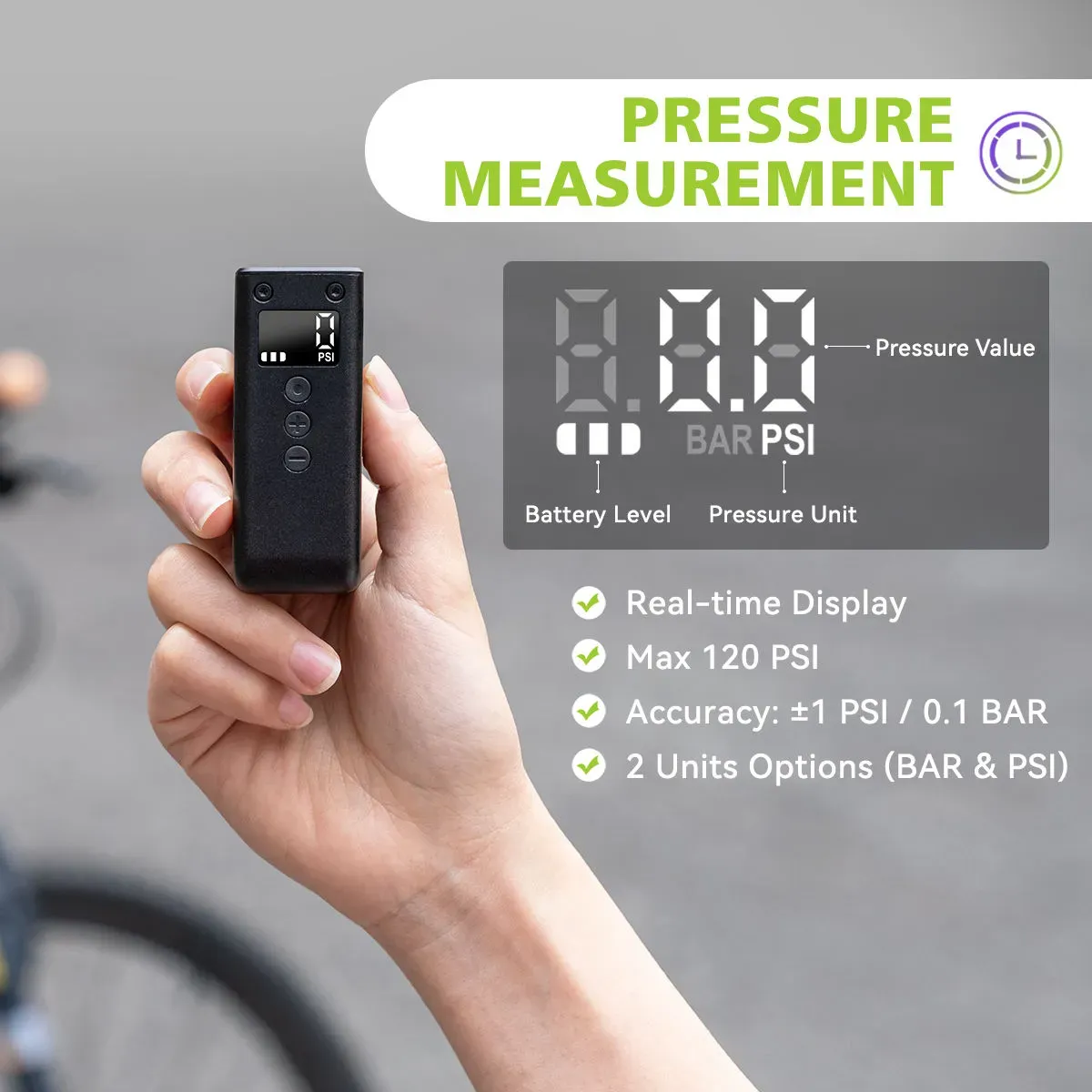
Accuracy matters more than maximum pressure. A pump that can reach 120 PSI isn’t automatically better if it overshoots, reads inconsistently, or struggles at higher pressures. Based on our testing with road and commuter setups, consistent readings are what make a mini electric pump feel genuinely “set-and-forget”.
For UK riders, reliable PSI readings are useful for:
- Road tyres: consistent feel across rides, safer cornering and braking.
- Gravel tyres: repeatable pressures for traction in mud and wet grass.
- Commuter tyres: balancing puncture resistance and comfort on broken road surfaces.
Workshop-style tip: if you’re running wider road tyres (28–32mm) or gravel tyres, the “right” pressure is often lower than people expect. Therefore, a clear digital display helps avoid over-inflation that can reduce grip on wet UK roads.
How long does a portable electric bike pump battery last?
Battery life isn’t just “how long it runs”; it’s how many inflations you can realistically get at your tyre volume and target PSI. In other words, a pump that’s fine for 25mm road tyres may feel limited on higher-volume gravel or MTB tyres.
- Tyre size: 25mm road tyres require less air volume than 45mm gravel tyres.
- Pressure target: going to 100 PSI takes more energy than going to 45 PSI.
- Temperature: cold UK mornings can reduce effective battery output and slow inflation.
For UK commuting, many riders prioritise “multiple top-ups across a week” rather than “one big emergency use”. Meanwhile, for bikepacking, charging flexibility (USB-C and power bank compatibility) becomes a key decision point.
How portable is a mini electric bike pump (weight and packability)?
On paper, a 20–40g difference can look trivial. However, on a real ride, it’s how the pump sits in a jersey pocket, frame bag or saddle pack that matters.
- Will it fit in the pocket you actually use?
- Does it need a separate hose/adapter, and will you remember it?
- Is the button layout easy to use with cold hands or gloves?
Do portable electric bike pumps work with Presta and Schrader valves?
Most UK bikes use Presta (common on road and many gravel bikes) or Schrader (common on commuter bikes and some MTBs). Therefore, valve compatibility is non-negotiable: look for a pump head or included adapters that support both, and check whether you’ll need to remove a dust cap, loosen the Presta tip, or use a short extension on deep-section rims.
How does UK weather affect tyre pressure (and your pump choice)?
UK riding conditions are a real factor. As temperatures drop, tyre pressure can fall, meaning a tyre that felt fine yesterday may feel soft today. Likewise, cold weather can reduce battery performance, so having enough capacity for repeated small top-ups is often more useful than chasing the highest max PSI.
According to UK road safety guidance, good maintenance (including tyres) supports safer handling and braking—especially in wet conditions. In that context, having a reliable, easy-to-use pump makes it more likely you’ll keep tyres at a sensible pressure rather than “making do”.
Portable electric bike pump vs CO2: which is better in the UK?
CO2 is fast and light, but it’s single-use and can be costly over time. A rechargeable electric pump is slower than a CO2 blast, yet it’s more repeatable and less wasteful for regular UK riding—especially if you top up often due to weather swings or slow leaks. Additionally, an electric pump lets you set a target PSI and stop automatically, which helps with consistency.
FAQ: portable electric bike pumps (UK)
What is the best portable electric bike pump in the UK?
The best option is a compact, USB-C rechargeable pump with accurate digital PSI, dependable battery performance in cooler weather, and Presta/Schrader compatibility—matched to your tyre volume and typical pressures.
Are portable electric bike pumps worth it for UK commuting?
Yes for most riders, because they make it easy to maintain consistent tyre pressure across changing UK temperatures, and they’re practical for office, station and roadside use without manual effort.
Do portable electric bike pumps work with Presta and Schrader valves?
Many do, but you should confirm compatibility before buying. UK riders commonly need Presta for road/gravel and Schrader for many commuter/MTB setups.
How long does a portable electric bike pump battery last?
It depends on tyre size, target PSI and temperature. Higher pressures and larger tyres use more power, while colder UK weather can reduce effective battery output.
Is a portable electric bike pump better than CO2?
For frequent UK riding and regular top-ups, an electric pump is often better value and less wasteful. CO2 remains useful for the lightest, fastest emergency inflation.
Why CYCPLUS UK focuses on real-world portability and repeatable pressure
At CYCPLUS UK, our mini electric pumps are designed around how people actually ride in the UK: quick pre-commute top-ups, rainy roadside fixes, and space-limited carrying (jersey pockets, panniers and small frame bags). Based on our testing and rider feedback, repeatable PSI accuracy and practical packability matter more day-to-day than chasing the biggest possible headline number.
Sources and references
NHS physical activity guidance (accessed 2024): NHS: Live Well – Exercise
Ready to try CYCPLUS UK?
Shop Now — £27.99